Flower Adaline: A Delicate Handwritten Typeface for Boutique Branding
I was sitting at my desk late last night, staring at a half-finished mockup for a new line of artisanal candle labels. The design felt flat, lacking that personal touch that makes customers stop scrolling on Etsy or pause in a boutique aisle. I needed something that whispered rather than shouted—something with a light and delicate charm that could elevate simple packaging into an experience. That is when I pulled up Flower Adaline. As a creator who spends hours balancing aesthetic beauty with production practicality, testing typefaces on real materials is the only way to know if they truly work. After spending the weekend designing sticker sheets, preparing invitation mockups, and checking tote bag designs, I can confidently say this script font has become a staple in my creative toolkit.
Flower Adaline for Candle Labels and Product Packaging Design
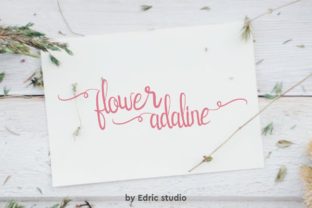
When you first download this Script Handwritten typeface, the immediate impression is one of youthful elegance. It isn’t stiff or overly formal; instead, it carries a natural flow that mimics the pressure and rhythm of a real pen on paper. I tested Flower Adaline extensively on various label sizes, from tiny 1x2 inch ingredient stickers to larger front-facing brand tags. The legibility remains surprisingly strong even at smaller point sizes, which is often a dealbreaker for decorative fonts. On my soy wax candle labels, the font added a layer of sophistication without overpowering the product photography. For handmade sellers, the visual personality of Flower Adaline helps establish a brand identity that feels curated and thoughtful. It suggests quality before the customer even reads the scent name. Whether you are creating boutique tags for jewelry or wrapping paper accents for seasonal products, this font provides the perfect balance of modern typography and classic charm.
Flower Adaline for Wedding Invitations and Elegant Stationery
Stationery designers know that invitations set the tone for the entire event. I used Flower Adaline to draft a wedding welcome board and a series of greeting cards for a client’s rustic-chic wedding. The font’s unique handwritten style adds a personal, intimate feel that printed serif fonts often lack. Because it is a Script Handwritten category font, it pairs beautifully with clean sans serif fonts for secondary information like dates and venues. This contrast ensures that while the names and titles pop with artistic flair, the logistical details remain easy to read. I found that Flower Adaline works best for short phrases, names, titles, and decorative wording. Trying to use it for long paragraphs would compromise readability, but for the main headers of your digital downloads or physical printables, it delivers exactly the emotional appeal you want. It transforms standard stationery into keepsakes.
Flower Adaline for Digital Downloads and Printable Wall Art
As a printable creator, my revenue streams rely heavily on how well my designs look in listing images. I tested Flower Adaline on several pieces of printable wall art, including nursery decor and farmhouse-style quotes. The font’s delicate charm translates exceptionally well to high-resolution PDFs and PNG files. When designing for platforms where users print at home, the clarity of the letterforms is crucial. Flower Adaline maintains its integrity, ensuring that the lines don’t break or blur when scaled down. I also experimented with using it for planner pages and journal covers. The youthful yet elegant feel resonates with audiences looking for organization tools that don’t feel sterile. By incorporating this creative font into your design assets, you offer buyers a product that feels both trendy and timeless. It is essential to check the included styles, alternates, and ligatures before finalizing your templates, as these features allow for greater customization in your digital downloads.
Flower Adaline for Merchandise and Cutting Machine Projects
For crafters who use Cricut or Silhouette machines, the vector precision of a font is just as important as its visual appeal. I cut Flower Adaline into vinyl for mugs, shirts, and tote bags to see how it held up during the weeding process. The curves and swashes were smooth, requiring minimal cleanup. However, I learned through trial and error that very tiny cuts should be avoided. When scaling the text down to fit on small items like hair bows or miniature gift tags, the delicate strokes can become too thin and fragile. For larger merchandise applications, such as signs or large tote bags, the font shines. It adds a professional finish to DIY projects, making them look store-bought. If you are selling physical products, ensure you have the correct commercial font licensing. Using Flower Adaline correctly allows you to create cohesive brand consistency across all your merch, from the product itself to the packaging tape and thank-you cards.
Font Pairing and Practical Production Tips
To get the most out of Flower Adaline, strategic pairing is key. Since it is a display font with significant character, it needs a neutral partner to ground the design. I recommend combining it with a simple serif font for body text or a bold sans serif font for emphasis. This combination creates a hierarchy that guides the viewer’s eye effectively. When designing social media graphics or web design elements, this pairing ensures your message is clear while still retaining artistic flair. Always review the file formats included in your purchase. High-quality Fonts come in multiple formats (OTF, TTF) to ensure compatibility with Adobe Illustrator, Photoshop, Canva, and other design software. Additionally, verify multilingual support if your shop serves international customers. By understanding the limitations and strengths of Flower Adaline, you can avoid common production pitfalls and create products that truly stand out in a crowded marketplace.